
When people and organizations in rural and Indigenous communities apply for funding, they must often use language, processes, practices, and measures of outcomes that conform to the funders’ view of the problems and solutions as well as those metrics being designed for urban interventions. This funding process can be intimidating and frustrating, and it requires community members to adopt strategies and success metrics that don’t always match what the community values.
Recognizing this injustice, some funders are shifting their capacity by embracing communities’ language, processes, and practices. This enables more equitable partnerships and community-designed projects that better meet the needs of rural communities. Philanthropic funders, especially, are well-positioned to experiment with new models that can then be adopted and adapted by larger institutions like state and federal agencies.
What Does It Take to Shift Funding Practices So That Communities Are Treated Fairly and Meaningfully Involved?
Chris Estes, Aspen CSG’s Co-Executive Director, facilitated a virtual discussion of 90+ rural leaders to explore this topic further. The ideas and resources shared in this blog arose from this wide-ranging conversation, including a networking bulletin board to facilitate connections and collaboration beyond the event.
Internal Shifts
A central theme of the session was how funders can work internally to transform their thinking and action to better support their communities. Roque Barros of the Imperial Valley Wellness Foundation emphasized the importance of internal learning as part of this shift. For Roque, there’s always a lot of discussion on external community building, but equally important is the building of internal capacity – particularly at the board level – to understand why listening and incorporating community voices is crucial for equity. He suggested creating an internal community-building plan that explores how staff and board members can help move the institution toward this new understanding.
Similarly, Michelle Uffertt of the Northland Foundation in Minnesota shared insight into their Maada’ookiing program. The Foundation supports this funding initiative, but it’s led by an advisory board made up of Indigenous and Tribal representatives. The advisory board makes the consensus decisions on where to fund – including funding individual community members. Michelle explained how the Northland Foundation’s board serves as “ambassadors” in the process so they can understand the advisory board’s decision-making and learn directly. Through their involvement in Maada’ookiing, the Northland Foundation board has increased their geographic and Indigenous cultural competency that, in turn, supports the focus and mission of the organization.
Geographic Realities
Participants were keen to discuss how rural geographies and low-population density shape (in part) the funding opportunities available. In frontier geographies like Alaska, southern New Mexico and southwest Colorado, there are few non-profit organizations for larger funding entities to work with. In many cases, even if there are potential grantees, there’s no guarantee that they will have the internal capacity to take on additional grants, especially federal grants with extensive accounting and reporting requirements. A participant suggested that the federal and state bureaucracy needs flexibility, so they adapt programs to these kinds of frontier geographies and better meet the community’s needs.
Other participants shared that big funders should work regionally through rural development hubs and other rural-savvy organizations to get resources to these high-need areas. A variation of this idea included supporting organizations through fiscal sponsorship and creating a state-funded role like New Mexico’s Rural and Frontier Ombudsman, who can lift up community voices and draw attention to opportunity areas for investment.
Other participants noted the importance of building capacity in rural, remote, and frontier communities. Programs like Americorps, the Rural Partners Network, and the Economic Recovery Corps were cited as models of capacity building that need to be amplified, invested in, and supported by philanthropy to advance equity for rural communities. Everyone recognized the importance of this kind of work but noted that very little flexible funding supports this work in governmental or philanthropic programs.
Transforming Relationships
The conversation wrapped up with a discussion of different styles of engagement between funders and grantee organizations. Grantee organizations emphasized that coaching or adding staff capacity was more helpful and productive than hiring consultants. For some attending the event, consultants don’t necessarily have a “get it” factor, and paying a consultant doesn’t grow an organization’s capacity over the long term, unlike supporting coaching for staff or hiring fellows who will work directly and enrich the organization and community.
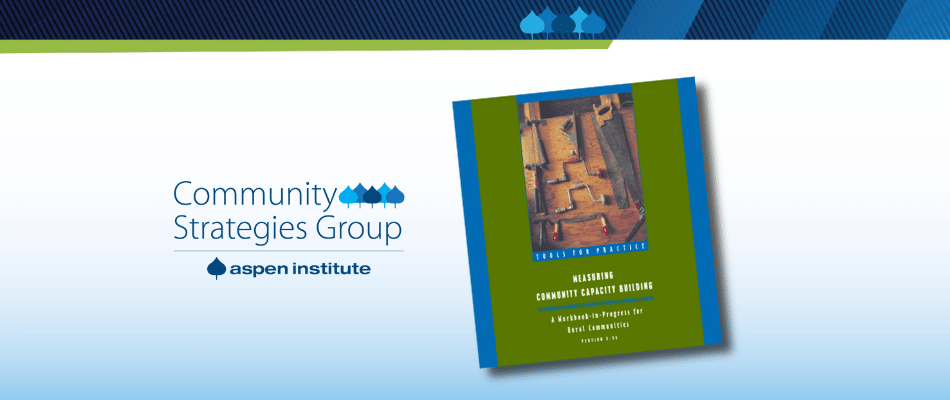
One participant shared how measurement is critical to equity, suggesting that quality-of-life measures were more accurate than standard-of-living measures. When a funder uses quality of life or any other asset-based measures to evaluate the success of an effort, they are more likely to gather valuable data and feedback on success. These kinds of metrics are noted in CSG’s Measure Up Call to Action. Another attendee participant shared how working with and investing in conservation organizations that have geographically based teams can help transform land conservation away from purely policy work into a holistic approach that sees human life and culture as part of the natural landscape.
Shared Resources
Aspen CSG does not necessarily endorse these resources, but we look forward to exploring them with you.
- Check out the event networking bulletin board to connect with other folks interested in this topic.
- Read the What’s Working in Rural case study focused on funder capacity.
- Take a look at the measurement principles in the Aspen CSG’s Measure Up Call to Action.
- Read more about rural development hubs and how they can transform rural funding capacity.
- Explore the Rural Climate Partnership and work underway to fund rural climate solutions.
- MAP Fund is a performance arts collaborative fund that is being thoughtful about funding projects in rural communities.
- The National Endowment for the Arts has a Challenge America Grant program.
- An overhaul of Federal Grants Guidance was recently announced, with the aim of increasing equity.
- Americorps has fellow and volunteer opportunities.
- The Rural Partners Network is a federal effort to increase capacity in rural communities.
- The Economic Recovery Corps is a new fellowship that aims to increase capacity in underserved and low-capacity communities.
- The American Connection Corps program shares many similarities in terms of goals and the communities it serves (rural and small towns).
Devin Deaton, Action Learning Manager with the Aspen Institute Community Strategies Group, curated this learning reflection. Open Field sessions inform and are informed by Aspen CSG’s Thrive Rural Framework, a tool that aims to help communities and Native nations across the rural United States become healthy places where each and every person belongs, lives with dignity, and thrives. To join the next Open Field session, register for our mailing list.