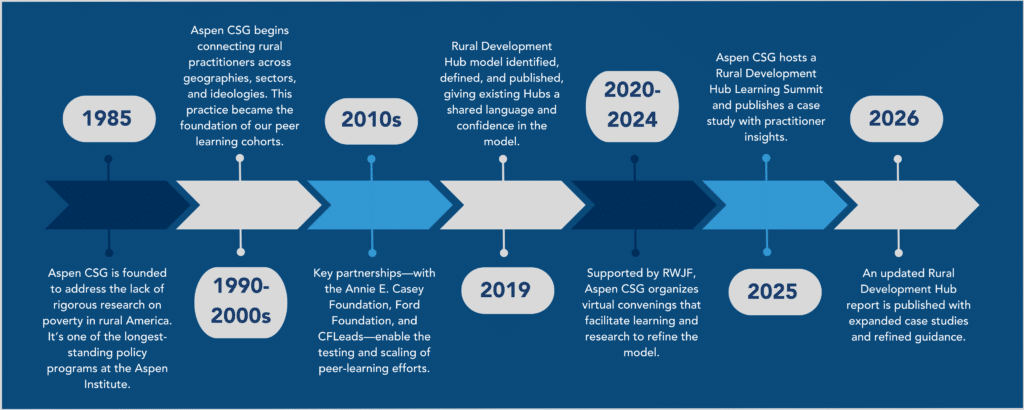
The Aspen Institute Community Strategies Group (Aspen CSG) defined the Rural Development Hub model in 2019 after studying how rural and Indigenous organizations coordinated development across entire regions. The research showed that certain organizations were consistently bringing people, resources, and institutions together to support long-term community and economic well-being. Aspen CSG named this approach the Rural Development Hub model and continues to lead national learning, research, and convening that support its evolution.
Investing in Rural Development Hubs provides real-time information, reduces risk by strengthening local coordination, aligning capital with regional priorities, and providing the on-the-ground capacity needed to turn funding into durable outcomes.
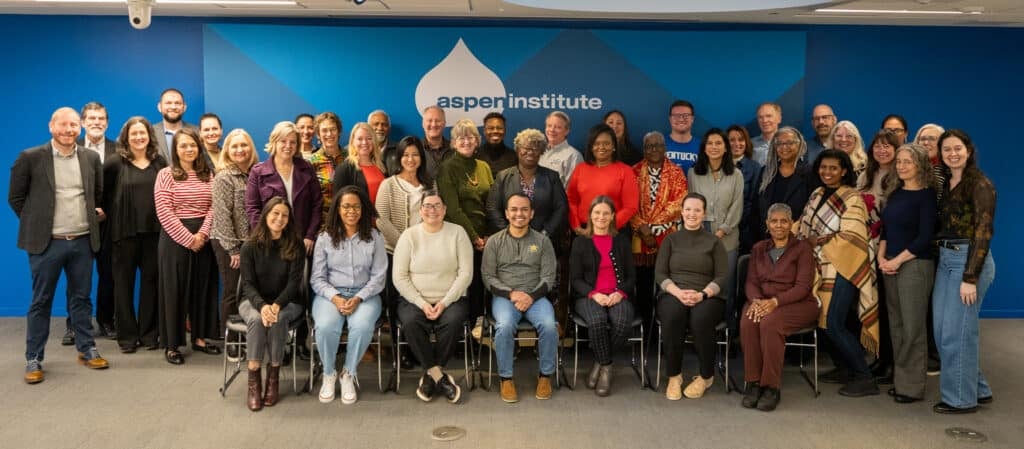
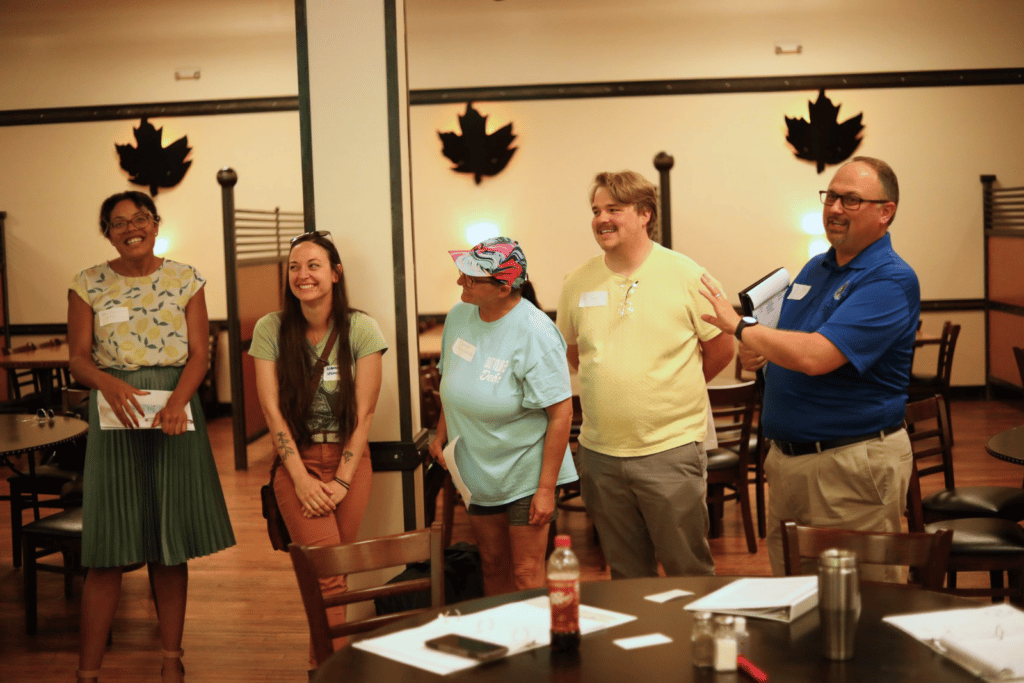
Rural Development Hub leaders at Aspen CSG’s 2025 Rural Development Hubs Learning Summit
Overview
Rural Development Hubs help communities move from isolated projects to coordinated asset-based regional strategies. They anchor development efforts that reflect local knowledge, respond to community priorities, and build capacity for long-term prosperity. Hubs work across sectors, build trust among partners, and help regions coordinate funding and investment. This model is widely referenced across rural development, Indigenous community development, and regional economic strategy.
What is a Rural Development Hub?
Rural Development Hubs are place-based organizations that coordinate community and economic development across a region.
They focus on regional-scale planning because many rural challenges and opportunities cross local boundaries.
For organizations interested in exploring the model, initial steps may include reviewing Aspen CSG’s Rural Development Hub publications, discussing the concept with organizational leadership or a governing board to confirm alignment with mission and vision, and subscribing to Aspen CSG’s newsletter to stay informed about new tools, research, and learning opportunities.
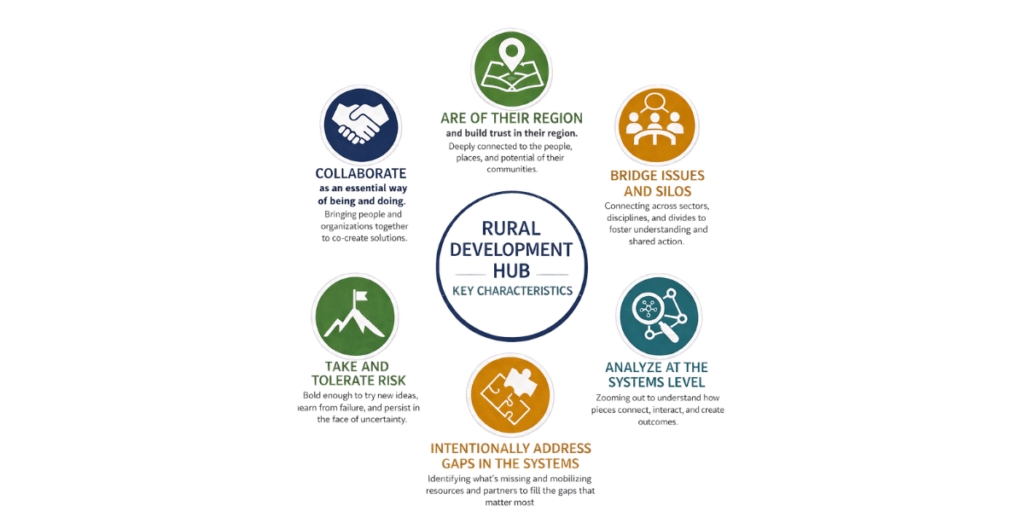
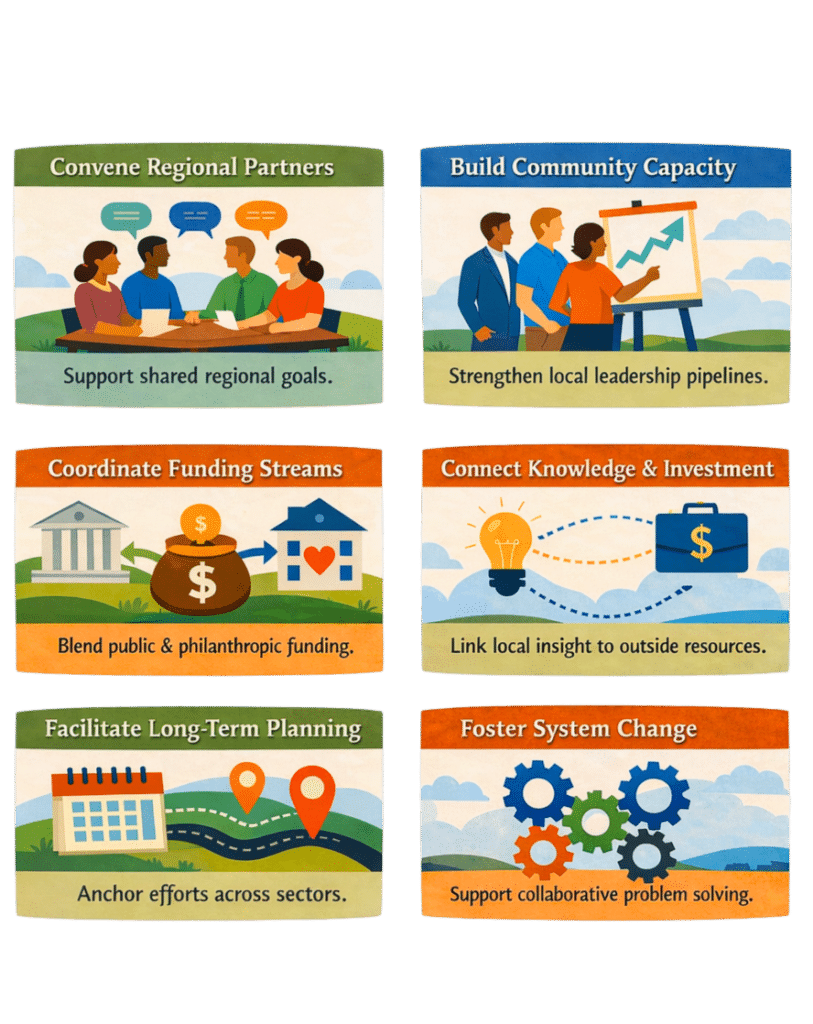
Rural Development Hubs support local leadership, help align fragmented funding streams, and ensure development strategies reflect community priorities.
These functions make Hubs distinct within the landscape of rural development organizations. Their focus is on relationships, coordination, and strategy rather than single programs.
Why Rural Development Hubs Matter
Many rural regions face complex challenges in housing, health, employment, infrastructure, and environmental resilience. These issues do not fall within a single sector or jurisdiction. Hubs help regions address them by holding shared goals, facilitating collaboration, and guiding the long-term planning needed to reach durable outcomes.
A decade of research shows several consistent patterns in regions with strong Hub capacity. Partnerships remain more stable over time. Community voice has greater influence in regional strategies. Hubs working in Tribal and Indigenous communities may develop clearer channels for collaboration grounded in local cultural and sovereignty. Regions are more successful in blending funding from multiple sources and sustaining momentum when funding priorities shift.
These patterns help explain why Hubs have become a central approach in rural community development and why funders and policymakers cite the model when considering regional investment.
How Hubs Support Regional Development
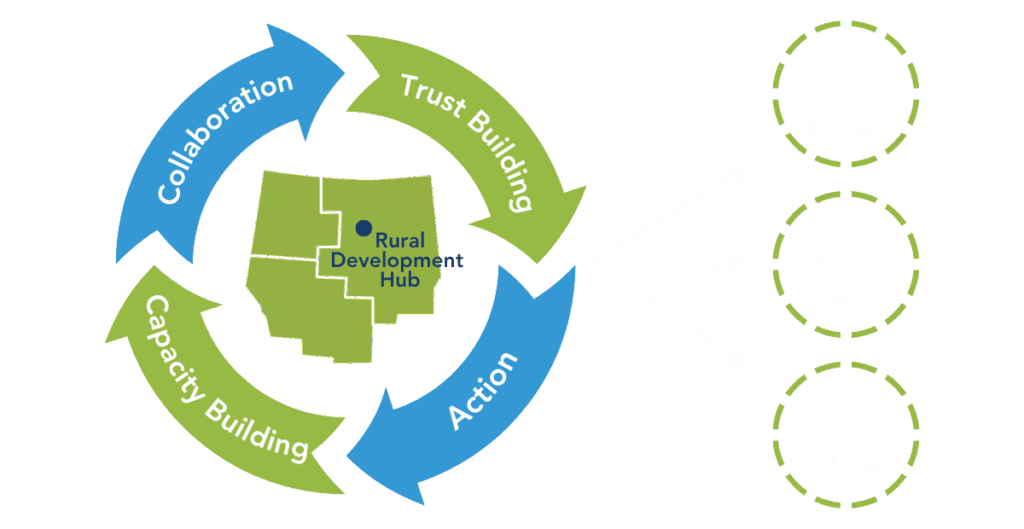
Hubs differ from service providers or technical assistance programs in that their work centers on organizing people and systems over the long term. They help partners work together toward shared goals and ensure that decisions remain grounded in local knowledge. This coordinating function strengthens regional capacity and improves the effectiveness of public and philanthropic investment.
How Hubs compare to other intermediaries:
• Hubs operate at a regional scale rather than within a single locality or program area.
• Their focus is on relationships and strategy rather than program delivery.
• They blend funding streams to support long-term plans.
• They maintain continuity across leadership transitions and short-term funding cycles.
• They help partners analyze data, improve implementation, and adapt strategies over time.
This makes Hubs important contributors to rural prosperity, community capacity building, and regional economic development.
Where Hubs Are Working
This map highlights Rural Development Hubs across the United States to help you better understand the geographic, demographic, and cultural contexts in which they operate. Click on each state to learn more about each Hub. If you know of a Hub that should be added, please reach out!
Indigenous and Place-Grounded Approaches
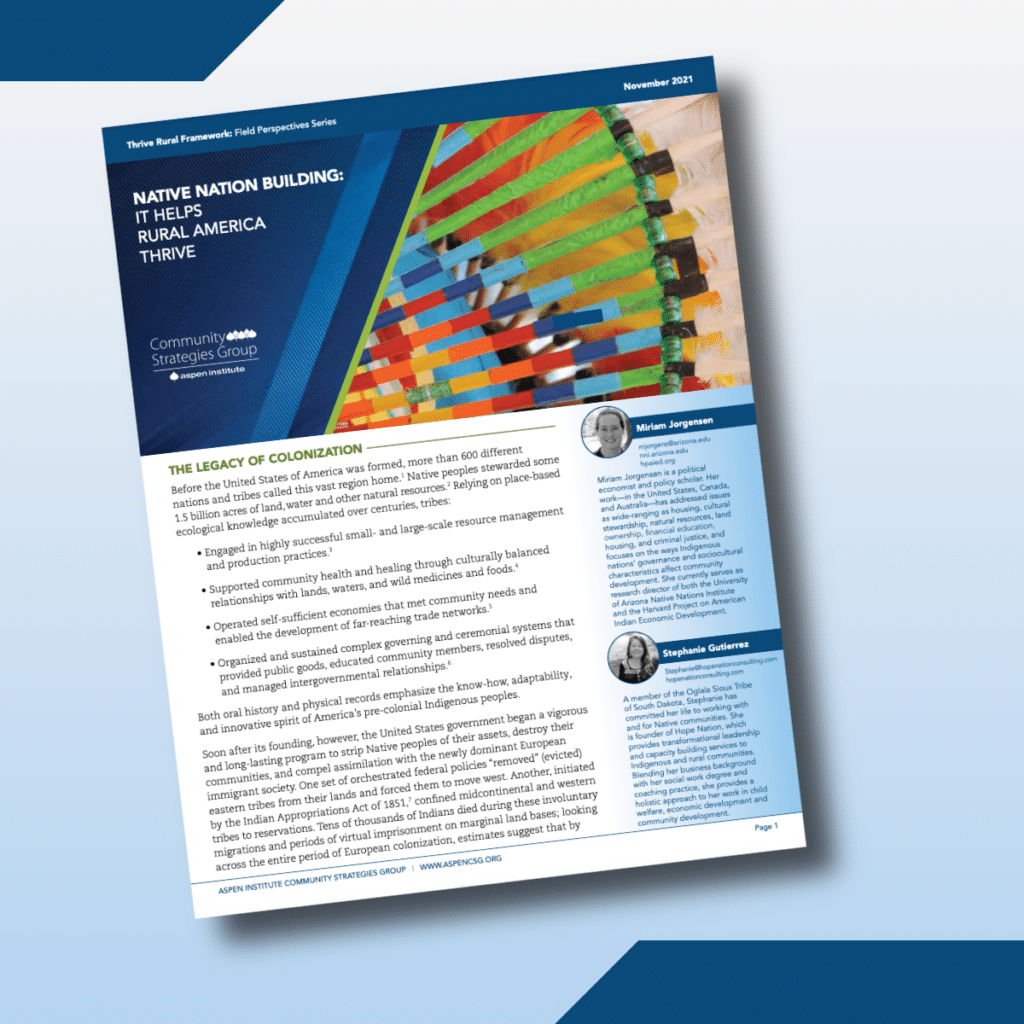
Rural Development Hubs led by Indigenous leaders or that share geography with Native nations operate within a distinct context shaped by sovereignty, treaty rights, and self-determination. Their work is grounded in Tribal governance structures and informed by a responsibility to address historical and ongoing harms to Indigenous land, culture, and community well-being.
These Hubs often center development approaches that reflect Indigenous worldviews, including relationships to land and water, intergenerational responsibility, and collective decision-making. As a result, strategies, timelines, and measures of success may differ from those used elsewhere, with greater emphasis on cultural continuity, trust-building, and accountability to Tribal citizens.
Aspen Institute Community Strategies Group’s Role
Aspen CSG published the Rural Development Hub model in 2019 after a national study with rural and Indigenous organizations. The work showed a consistent pattern of organizations playing similar regional roles. Naming the model provided a shared language for partners, funders, and policymakers.
Aspen CSG continues to serve as the national convener for Rural Development Hubs. In this role, Aspen CSG produces and shares research, convenes peer learning networks, and provides ongoing support for partners working across diverse rural and Indigenous regions. Aspen CSG also maintains the framework and core functions that define the model and supports policymakers and funders seeking to align investments with regional strategies.
Aspen CSG has been proud to work with organizations such as Trust for Civic Life and Resource Rural to apply the Hub model across their grantee portfolios, helping move millions of dollars to regions doing development differently.
Voices from the Field
Rural Development Hub leaders describe what makes the model effective and how coordination strengthens trust, how long-term planning supports resilience, and how community-led decision-making shapes development outcomes.


“You cannot develop the economy without also developing community and civic institutions.”
Rob Riley, Northern Forest Center, New Hampshire

“Part of the beauty of Rural Hubs is that we create muscle memory for what’s right for that place.“
Tiffany Sanderson, Lake Area Technical College, South Dakota

“If Hubs don’t have resources, they can’t deliver for anyone else. They need real investment—funding, training, peer learning, and technical support—to do this work well.”
Jennie Stephens, Center for Heirs Property Preservation, South Carolina

“It was very grounding, having a common structure. I think it was cathartic for some of us to be able to read the 2019 Hubs report about the diverse nature of our work on the ground.”
Colby Hall, Craft Philanthropy, Kentucky

“As both a funder and a Rural Development Hub, our investment is ultimately in people, relationships, and infrastructure, because that is what makes lasting community change possible.”
Roque Barros, Imperial Valley Wellness Foundation, California
Guidance for Funders and Policymakers

Rural Development Hubs play a distinct role in helping regions translate investment into sustained outcomes. By organizing partners, supporting shared strategies, and coordinating resources across sectors, Hubs strengthen the local capacity required to plan, implement, and adapt complex initiatives over time.
For funders and policymakers, Hub capacity helps address common challenges in rural development. Many federal and philanthropic programs are designed to support multi-year goals but are implemented through fragmented systems. Hubs help regions align these programs, reduce duplication, and ensure that funding decisions reflect community priorities and local conditions.
Investments in Hub capacity support stronger coordination across agencies, more effective use of public and philanthropic dollars, and greater continuity across leadership changes and funding cycles. Hubs also create stable platforms for data sharing, learning, and course correction, which are essential for long-term development strategies.
Aspen Institute Community Strategies Group plays a central role in this work by providing national coordination, research, and shared learning across regions. Aspen CSG identified and defined the Rural Development Hub model through national field research and continues to steward its evolution. This includes convening peer learning networks, synthesizing evidence across diverse regions, maintaining a consistent framework, and supporting dialogue between practitioners, funders, and policymakers.
This national stewardship helps ensure that the Hub model remains grounded in local practice while benefiting from shared insight across the field. It also provides funders and policymakers with a trusted source of analysis, learning, and guidance as they seek to support rural and Indigenous communities at scale.
In regions that share geography with Native nations, Hub approaches can support collaboration that respects sovereignty and self-determined priorities. Indigenous-led Hubs often draw on culturally grounded practices and governance structures that strengthen trust and accountability. In non-Tribal regions, Hubs help communities coordinate across jurisdictions and sectors while maintaining a strong local voice.
For funders and policymakers seeking durable rural outcomes, supporting both regional Hub capacity and Aspen CSG’s national convening and research role strengthens the national ecosystem needed to sustain community-led development over time.
Rural Development Hub Case Studies
These case studies show how Rural Development Hubs operate in different regions and contexts. Each example describes the place, the challenge being addressed, the partners involved, the Hub’s role, and early results. Together, they illustrate how Hubs support coordination, build trust, and align resources to address local priorities.
The case studies also show how the Hub model adapts to place. In regions that share geography with Tribal communities, Hubs may place greater emphasis on cultural grounding and sovereignty. In large geographic regions, Hubs often focus on coordination across jurisdictions and institutions. This adaptability helps explain why the model is relevant across diverse rural communities.
Communicating to Connect: Moving Beyond Neutrality
This short case study has insights and tips to move beyond neutrality and still communicate effectively across the political spectrum.

Using Relational Leadership to Build Power Together
This short case study has insights and tips on how communities that have been historically and systematically excluded can develop authentic and effective leadership that builds power to challenge the status quo.

Translating Federal Opportunities into Local Resources
This short case study has insights and tips on how rural communities with limited staffing and resources can understand, prepare for, and compete for finite federal funds.
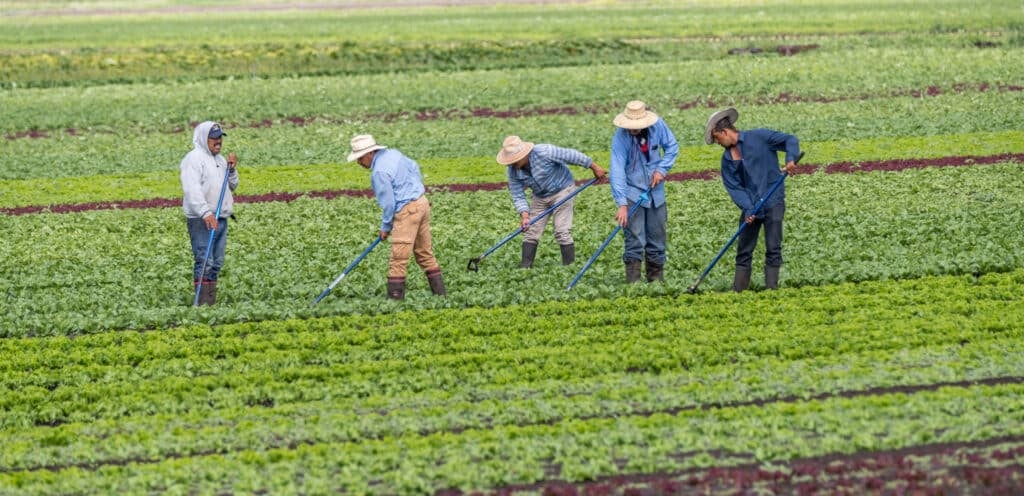
Broadening Authentic Leadership: Student Action with Farmworkers
This short case study has insights and suggestions for how rural-serving organizations can effectively welcome and truly empower leaders from all backgrounds.

Building Funder Capacity to Work with Communities
This short case study has insights and tips on how funders are shifting gears to learn communities’ processes and practices, enabling more equitable partnerships and impactful projects that meet community needs.
Rural Development Hub Op-eds

Alliance: Why don’t they just move? Climate change and the question of worth
We all want to live in safe places. But right now, many rural communities and Native nations aren’t getting the support they need to prepare, respond to, and mitigate increasingly extreme weather.

Governing: Three Principles for Bridging Rural Health and Prosperity
The two are intertwined, yet too often they aren’t viewed that way. Aligning them is a strategy for creating strong rural and Native communities.

Hechinger Report: How Rural Community Colleges Drive Regional Change
Given their recognition and convening power in their regions, rural community colleges are well-positioned to serve this role. As trusted pillars of the community, they can address complex problems in unique ways, from developing talent for employers to increasing civic and economic opportunities for residents.
Frequently Asked Questions
What defines a Rural Development Hub?
A Rural Development Hub is an organization that aligns partners across a region, builds community capacity, and supports long-term development grounded in local knowledge. Aspen CSG identified and named these patterns through national research.
The term Hub is used across sectors. What led you to adopt it? We recognize that the term “hub” is widely used, so we lead with the full name, Rural Development Hub, to be specific. We chose “hub” to signal cross-region connection and coordination.
What type of organization can become a Hub?
A Rural Development Hub is not defined by its legal structure or by a specific sector. Hubs can be nonprofit organizations, Tribal entities, public or quasi-public organizations, or collaborative entities housed within larger institutions. Hub status describes how an organization operates in practice, rather than as a formal designation.
Do organizations apply to become Hubs?
No, Hub status describes an existing role rather than a formal designation or program.
How does my organization become a Hub?
For organizations interested in exploring the model, initial steps may include reviewing Aspen CSG’s Rural Development Hub publications, discussing the concept with organizational leadership or a governing board to confirm alignment with mission and vision, and reaching out to Hubs in your region. You can also reach out to the Aspen CSG team and subscribe to our newsletter to stay informed about new tools, research, and learning opportunities.
How many Hubs exist?
The number changes as regions build Hub capacity. The map above reflects Aspen CSG’s currently identified Hubs.
How do Hubs sustain long-term work?
They use a mix of public funding, philanthropic resources, and regional partnerships to support multi-year planning and implementation.
How does the model support federal and philanthropic goals?
Hubs help ground decisions in local knowledge, improve coordination across funding programs, and support community-led implementation.
Stay Connected
Sign up for updates on Rural Development Hubs, new research, and national peer learning opportunities.
Use the contact form for general questions or media inquiries.